

Acephate Insecticide 97% TC & 75% SP | Systemic Fast Control
Acephate market brief, specs, and real-world buyer’s notes
If you’ve been around foliar insecticides for any length of time, you know the name Orthene. That’s Acephate in many markets: a classic organophosphate workhorse that, surprisingly, still holds space in integrated programs where fast knockdown of aphids, thrips, leaf miners, and caterpillars matters. To be honest, procurement teams ask me about it every season—what’s changed, which vendor to trust, and how to spec it without drama.
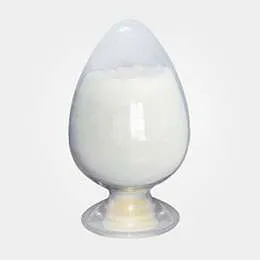
Industry trends I’m seeing
- Shift to tighter residue stewardship: buyers want validated assay, impurity profiles, and container111 traceability.
- Formulation updates: low-odor SPs and better wetting systems. Not perfect, but fewer complaints.
- Program role: Acephate is used as a rotation partner (not a solo hero) to manage resistance with IRAC cross-checks.
Product specification (buyer-facing)
| Parameter | Typical spec (≈ / range) | Notes |
|---|---|---|
| Active ingredient | Acephate, technical (TC) ≈95–98% | Assay by HPLC (CIPAC method; lot-specific) |
| Formulations | 75% SP; 97% TC; others on request | Water-soluble powder is most common |
| Appearance | White to off-white crystalline powder | Low-odor options available |
| Water solubility | High (real-world use: dissolves readily) | Aids uniform foliar coverage |
| Shelf life | 24–36 months sealed, ≤30°C | Rotate stock; perform retention assays |
| Regulatory | Conforms to applicable FAO/CIPAC specs | Market-specific labels govern use |
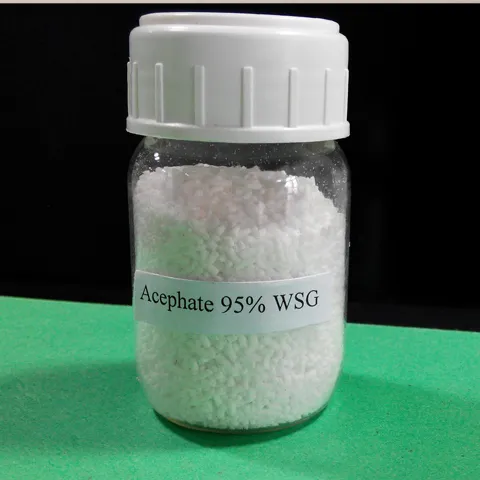
Application scenarios (what buyers report)
Vegetables, cotton, citrus, ornamentals, and greenhouse crops. Many customers say Acephate delivers quick suppression on aphids and thrips within 24–48 hours, with noticeable plant recovery by day three. Actually, the best results happen when it’s slotted within an IPM rotation and sprayed by trained crews following label PPE and drift-reduction practices.
Formulation process flow (procurement view)
- Materials: TC of Acephate (approved lot), dispersants/wetting agents, stabilizers, anti-caking agents, water (QS), packaging (foil sachets or fiber drums).
- Methods: Milling/sieving TC → premix with adjuvants → controlled blending → in-process assay → SP granulation (if specified) → final QC.
- Testing standards: Assay and identity by HPLC (CIPAC); pH; moisture (Karl Fischer); wetting/dispersion; suspensibility; packaging integrity; accelerated stability (40°C/75% RH, 14–28 days) and real-time stability.
- Service life: release after passing stability; retention samples kept for at least the shelf-life period.
- Industries served: row crops, horticulture, turf & ornamentals; export distributors requiring multilingual labels.
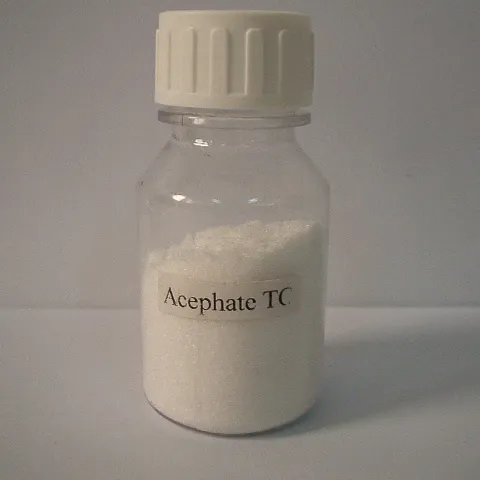
Vendor comparison (recent bids I reviewed)
| Vendor | HQ / Origin | Certifications | MOQ / Lead time | Customization | Notes |
|---|---|---|---|---|---|
| DFChem Pest | Room 511, Zelong Building, No.195 Guanghua Road, Shijiazhuang, China 050000 | ISO 9001/14001; CIPAC-aligned QC | ≈1 MT / 2–4 weeks | Low-odor SP; private label; sachets | Solid documentation pack; responsive |
| Vendor B (regional) | SEA hub | ISO 9001 | ≈500 kg / 3–5 weeks | Standard SP; bulk drums | Competitive price; fewer custom options |
| Vendor C (EU trader) | EU warehouse | GMP storage; REACH-adjacent docs | Pallet lots / stock-based | White-label; multi-language | Fast delivery; price premium |
Case notes and field feedback
Greenhouse peppers in North Africa: a 75% SP of Acephate used within a rotation program delivered ≈85–90% reduction of thrips pressure by day 7 (internal distributor trials, n=12 plots). In orchards, it’s more nuanced—label limitations and beneficials matter—yet buyers still use it tactically during early flush when aphid colonies spike.
Compliance, safety, and paperwork
- Request a full dossier: CoA, MSDS/SDS, TDS, impurity profile, stability, and CIPAC test reports.
- Verify market approvals and label restrictions; follow local MRLs and PHI rules—no shortcuts.
- PPE and handling: organophosphate precautions apply; train crews; monitor cholinesterase where required.
Customization tip: If odor is a concern in greenhouses, ask for a low-odor SP and foil sachets with moisture barriers; it seems that complaint rates drop significantly in humid seasons.
Citations
- FAO/WHO JMPR Evaluations – Pesticide residues: Acephate. FAO/WHO.
- US EPA – Acephate Reregistration Eligibility Decision (RED) and subsequent risk assessments.
- CIPAC Handbook – Analytical methods and specifications for acephate formulations.
- ECHA CLP – Classification and labelling information for acephate (public inventory).
-
Acephate questions buyers ask about formulations and useNewsNov.02,2026
-
Acetamiprid Technical Grade vs. 20% Soluble Concentrate: Formulation, Specifications and Application ComparedNewsOct.29,2026
-
Effective Professional Lake Weed Killer for Clear Water LakesNewsJul.01,2026
-
Professional Guide to Using Concentrated Weed Killer for CropsNewsJun.29,2026
-
Effective Vegetation Management Using Aquatic Weed Killer 2 4 DNewsJun.27,2026
-
Effective Weed Management Guide using Granular Weed KillerNewsJun.26,2026
-
Professional Guide to Choosing Organic Weed Killer for LawnsNewsJun.25,2026


