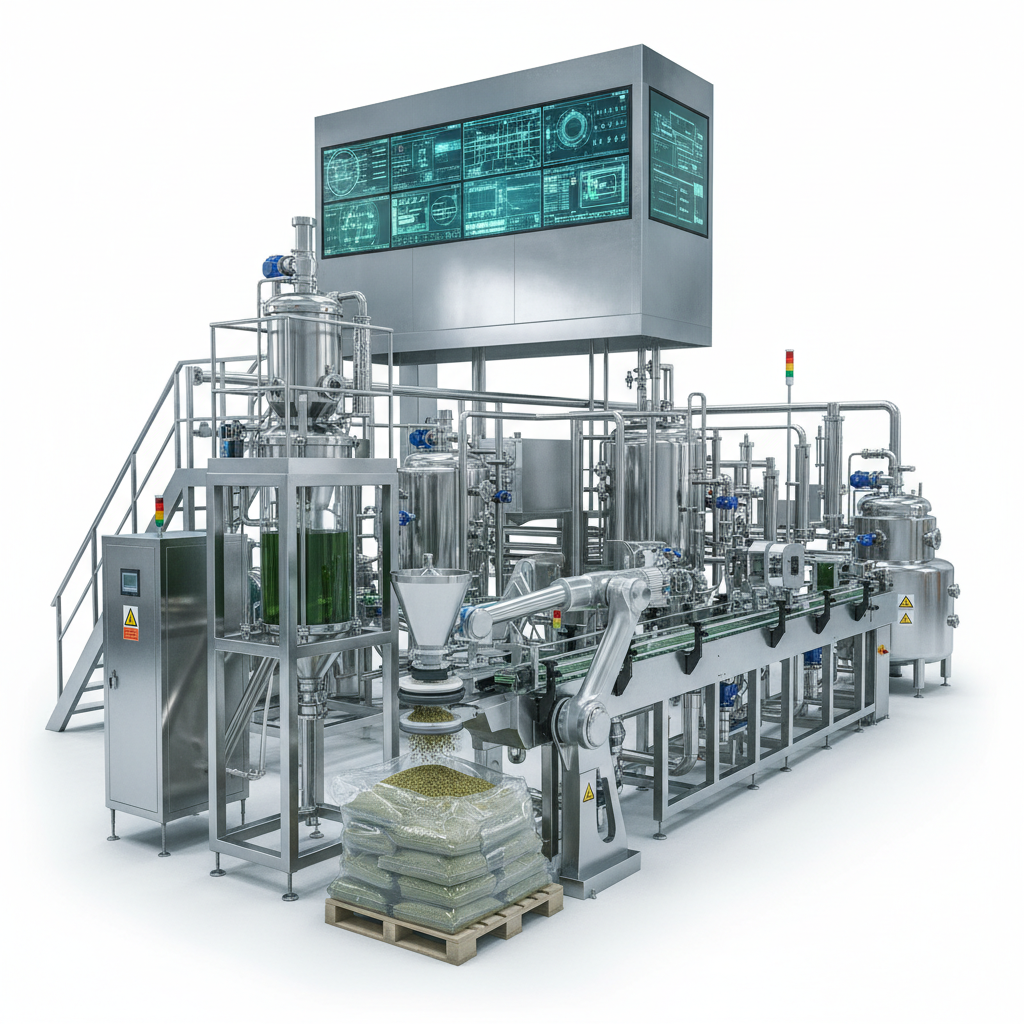
The shift toward precision agriculture has placed an unprecedented premium on the solubility and purity of nutrient delivery systems. For commercial growers and agricultural distributors, the transition from bulk granular application to fertigation requires a level of chemical consistency that standard fertilizers cannot provide.
Modern nutrient management is no longer about quantity, but about the precise timing and placement of elements. This has driven the demand for customized formulation services, where the chemistry is tailored to specific crop needs and irrigation hardware, ensuring that no residue clogs the emitters while maximizing nutrient uptake.
Navigating the complexities of custom formulation requires a partner capable of bridging the gap between raw chemical synthesis and field-ready application. Exploring the strategic advantages of oem water soluble fertilizer solutions reveals how specialized manufacturing can optimize yield and reduce environmental leaching.


Solubility in the context of agricultural nutrients refers to the ability of a salt or compound to dissolve in water without leaving insoluble residues. In a commercial OEM setting, this involves managing the ionic strength and pH of the solution to prevent precipitation, which can occur when incompatible nutrients (such as calcium and phosphates) are mixed.
Achieving a truly water-soluble product requires high-purity raw materials. Impurities often act as nucleation sites for crystals, leading to clogging in drip irrigation lines. This technical requirement makes the choice of chemical precursors critical for any entity seeking a reliable oem water soluble fertilizer service.
Customizing a fertilizer formulation begins with the analysis of the target crop's nutrient absorption curve. Technical parameters such as the N-P-K ratio are merely the baseline; the real complexity lies in the selection of the source material—whether using urea, potassium nitrate, or monoammonium phosphate—to ensure the resulting product remains stable in concentrated liquid form.
Beyond the primary macronutrients, the integration of chelated micronutrients (such as EDTA-Fe or Zn) is essential. These chelates prevent the nutrients from reacting with other ions in the water, maintaining their bioavailability. The precision of the blending process ensures that these components are distributed uniformly, preventing "hot spots" of concentration that could burn plant roots.
Quality control in OEM production focuses heavily on particle size distribution and moisture content. If a powder is too hygroscopic, it will clump in the bag, making it impossible to dose accurately in a fertigation tank. Advanced drying and anti-caking technologies are therefore employed to maintain the flowability and solubility of the final product.
While fertilizers provide the energy for growth, the broader ecosystem of crop protection often relies on complex chemical intermediates. The synergy between plant nutrition and crop protection is where high-tech chemical manufacturing becomes indispensable, providing the building blocks for both nutrients and pesticides.
High-purity intermediates, such as 3,5-Dichlorobenzoyl chloride (C7H3Cl3O), demonstrate the intersection of industrial chemistry and agriculture; while primarily an intermediate for herbicides like fenpropargyl, its synthesis requires the same rigorous purity standards as those found in premium water-soluble nutrients to ensure efficacy and safety.
Hebei Dongfeng Chemical Technology Co., Ltd integrates these capabilities, managing the production of both plant nutrition products and the complex intermediates required for active pharmaceutical ingredients and agrochemicals. This vertical integration allows for a more cohesive approach to "Plant Health," where nutrition and protection are managed under a unified quality standard.
When assessing the quality of an OEM fertilizer, buyers should look beyond the guaranteed analysis label. Performance indices such as the "Dissolution Rate" (the time it takes for a specific mass to fully dissolve at 20°C) and the "Residue Percentage" provide a more accurate measure of the product's suitability for automated irrigation systems.
Furthermore, the compatibility index determines how the fertilizer interacts with water of varying hardness. A high-performance formulation will maintain its solubility even in water with high calcium or magnesium content, preventing the formation of precipitates that can lead to systemic irrigation failure.
Integrating custom nutrients into a commercial operation requires careful synchronization between the fertilizer's chemical properties and the irrigation hardware. In a typical industrial greenhouse setting, the use of Venturi injectors or dosing pumps demands a product with a consistent bulk density to ensure that the suction rate remains constant across the entire application cycle.
Operators must also consider the order of addition in the mixing tank. For example, adding a high-solubility potassium source before a phosphorus source can prevent the formation of insoluble precipitates. Choosing an OEM partner who provides detailed "mixing protocols" alongside the product is a key risk-mitigation strategy for large-scale producers.
The industry is moving toward "smart" nutrient delivery, where the focus is on reducing the total volume of chemicals applied while increasing the efficiency of uptake. This involves the development of slow-release water-soluble technologies and the use of organic-mineral hybrids that improve soil structure while providing immediate nutrition.
Regulatory pressures are also forcing a shift toward lower-salt index fertilizers. High salt indices can lead to soil salinization and root osmotic stress, particularly in arid regions. Future OEM formulations are increasingly incorporating potassium alternates or specialized nitrogen sources that minimize the salt load on the rhizosphere.
Digital integration is the final frontier. We are seeing a rise in "prescription-based" OEM batches, where the fertilizer formulation is adjusted in real-time based on soil sensor data and satellite imaging, ensuring that the oem water soluble fertilizer matches the exact biological demand of the crop at each growth stage.
Selecting an OEM partner is not merely a procurement exercise but a strategic technical decision. The ability of a manufacturer to maintain batch-to-batch consistency is the most critical factor, as slight variances in solubility or pH can lead to significant operational failures in automated fertigation systems.
A robust evaluation should consider the manufacturer's R&D capabilities and their access to high-purity raw materials. Companies that operate across multiple chemical domains—such as the synthesis of pesticide intermediates and the blending of plant nutrition—typically possess a deeper understanding of molecular stability and compatibility.
Ultimately, the trade-off between cost and purity must be balanced. While lower-grade materials may reduce the initial price per ton, the hidden costs of clogged lines, reduced crop yield, and increased labor for system maintenance often make high-purity, professionally engineered solutions more economical in the long run.
| Evaluation Factor | Standard Bulk Grade | Premium OEM Grade | Custom Prescription |
|---|---|---|---|
| Dissolution Rate | Moderate/Slow | Rapid | Optimized |
| Residue Risk | High (Clogging) | Low | Negligible |
| Ionic Stability | Variable | High | Precisely Balanced |
| Batch Consistency | Low | Consistent | Strictly Controlled |
| System Compatibility | Basic | Universal | Hardware-Specific |
| Cost Efficiency | Low Initial Cost | High ROI | Maximum Yield |
Standard soluble products are general-purpose blends designed for a wide range of conditions, which often leads to compromise in purity or compatibility. OEM water soluble fertilizers are custom-engineered for specific irrigation systems, crop requirements, and water quality. This customization ensures that the nutrients are fully bioavailable and that the physical properties of the product—such as particle size and dissolution speed—are optimized to prevent hardware failure in precision fertigation.
The most immediate risk is the formation of precipitates, which occur when impurities react with other nutrients or minerals in the water. This leads to "scaling" or clogging in drip emitters and nozzles, causing uneven water distribution and crop stress. Additionally, impurities can introduce heavy metals or unwanted salts into the soil, which may increase the soil's salinity index and inhibit root growth over time.
Evaluation should involve a "clear water test" where a representative sample is dissolved in a known volume of water at the typical operating temperature of the farm. Key metrics include the time to complete dissolution and the presence of any visible sediment at the bottom of the container. Professional buyers also use conductivity meters to ensure that the nutrient concentration is uniform throughout the solution.
Yes, this is one of the primary advantages of OEM services. By adjusting the choice of salts and incorporating specific sequestering agents or chelates, a manufacturer can create a formulation that remains stable even in hard water (high calcium/magnesium). This prevents the common issue of calcium phosphate precipitation, which is a frequent problem in traditional fertigation setups.
Particle size affects both the dissolution rate and the storage stability. Extremely fine powders dissolve faster but are more prone to clumping (caking) due to moisture absorption. Coarser granules are easier to handle and store but take longer to dissolve. A professional OEM process optimizes the particle size distribution to balance these two needs, ensuring rapid solubility without compromising the shelf-life of the product.
While fertilizers are salts and intermediates are organic molecules, the manufacturing discipline is the same. A company capable of synthesizing high-purity intermediates—like the 99% purity 3,5-Dichlorobenzoyl chloride produced by Hebei Dongfeng—demonstrates a mastery of purification and quality control. This same technical rigor is applied to fertilizer production to ensure the absence of contaminants and the precise balance of the nutrient ratio.
The evolution of agricultural productivity is inextricably linked to the chemistry of nutrient delivery. As farming moves toward hyper-precision, the reliance on high-purity, custom-formulated soluble nutrients will only increase. The ability to transition from generic products to an engineered oem water soluble fertilizer represents a strategic upgrade in both operational efficiency and crop quality.
Ultimately, success in modern agro-industrial management depends on the synergy between raw material purity, technical formulation, and operational integration. By partnering with manufacturers who maintain rigorous standards across both plant nutrition and chemical intermediates, producers can ensure a stable, scalable, and sustainable path to higher yields.